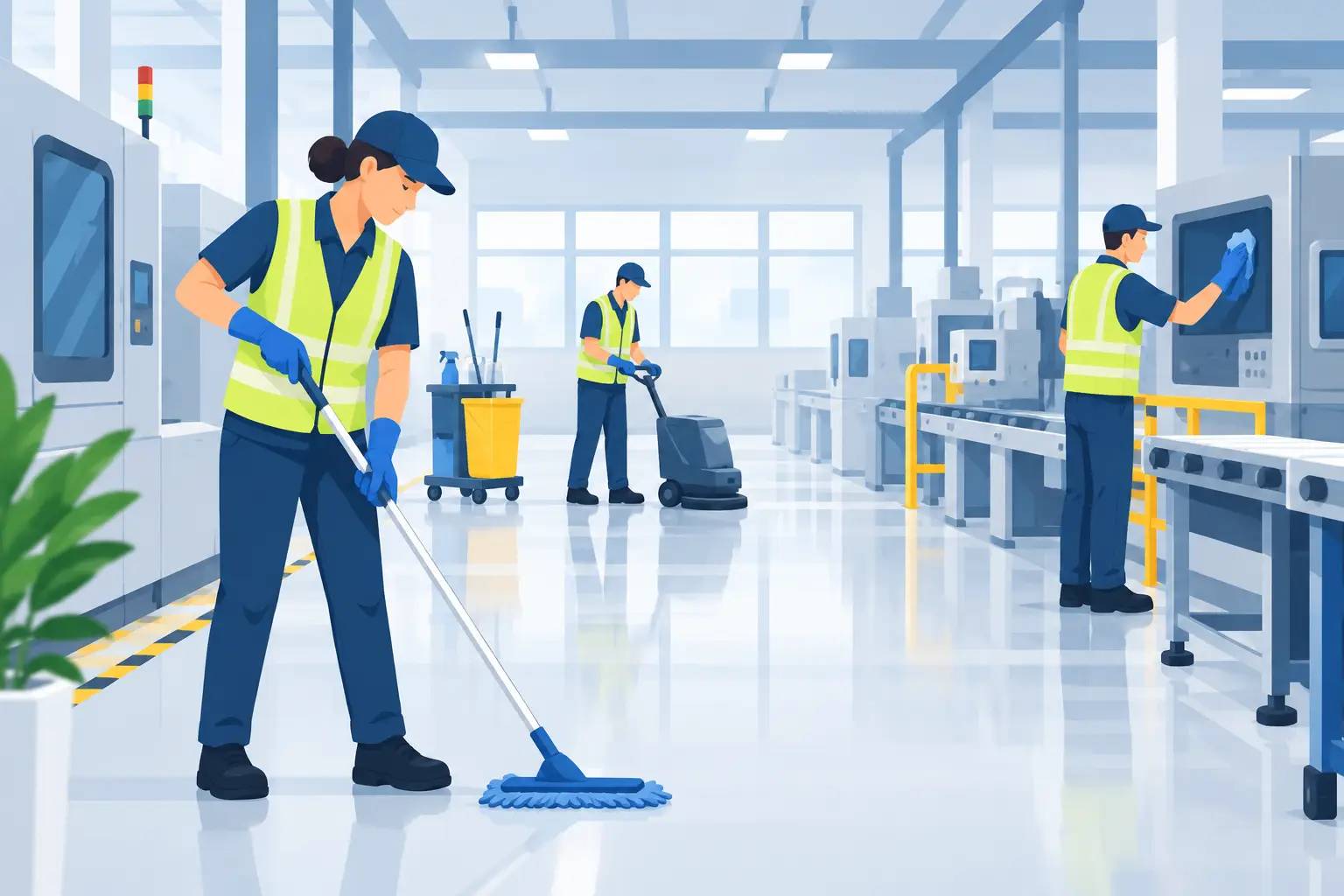
A factory floor can look acceptable while still creating real problems: dust around machinery, oil near walkways, residue in staff areas or waste building up beside production lines. The best practices for factory cleaning focus on controlling those risks without disrupting output. A good plan keeps people safer, protects equipment and gives managers confidence that standards are being maintained shift after shift.
Factory cleaning is not a one-size-fits-all job. A food production site, engineering workshop, warehouse and packaging facility each have different hazards, surfaces and hygiene expectations. The right approach starts with how your site actually operates.
Start with a site-specific cleaning plan
Before choosing products or booking cleaners, map the building properly. Identify production areas, loading bays, staff facilities, storage zones, offices, washrooms, plant rooms and external entrances. Then consider what happens in each area: footfall, vehicle traffic, dust generation, spill risks, sensitive machinery and the type of waste produced.
This assessment should shape the cleaning frequency. Entranceways and washrooms may need attention every day, while high-level beams, ventilation covers and less-used storage areas can be scheduled less often. A busy manufacturing line may need short cleans between shifts rather than one long clean that stops work for hours.
The aim is not to clean everything with the same intensity. It is to put time and effort where it reduces risk most effectively. Your plan should also clearly state who is responsible for daily housekeeping, who handles periodic deep cleaning and who reports issues that need immediate action.
Best practices for factory cleaning: zone the site
Zoning prevents dirt, debris and cleaning equipment from moving from a lower-risk area into a sensitive one. It is particularly useful where factories handle food, medical products, electronics or finely finished goods, but it improves standards in almost every industrial setting.
Assign cleaning tools and equipment to defined areas wherever possible. For example, mops and cloths used in washrooms should never be used in staff kitchens or production spaces. Clear colour coding helps teams work quickly and avoids guesswork, especially where several people clean across different shifts.
Think about the direction of travel too. Cleaning should generally move from cleaner areas to dirtier ones, and from high surfaces down to floors. This stops settled dust and debris from undoing work that has already been completed. Loading bays, waste zones and outdoor-facing entrances often need separate equipment because they bring in the heaviest contamination.
Build cleaning around production, not against it
The best cleaning schedule is realistic enough to be followed. If a task can only be completed by shutting down a machine for several hours, it needs careful planning with production managers. If it can be handled during a changeover or after a late shift, disruption may be much lower.
Daily cleaning should deal with the conditions that affect safety and presentation straight away. This can include removing loose packaging, treating spills, cleaning washrooms, emptying bins and keeping walkways clear. Weekly and monthly programmes can cover more involved work such as floor machine cleaning, degreasing, wall washing, internal glass and high-level dust removal.
Periodic deep cleans are valuable after maintenance work, seasonal peaks, a site rearrangement or an unusually dusty production run. They restore areas that routine cleaning may not reach, including racking, pipework, ledges and difficult corners behind equipment. The exact timing depends on the operation, not an arbitrary calendar date.
Put safety before speed
Factories present cleaning hazards that are not common in offices or homes. Moving vehicles, conveyors, chemicals, wet floors, hot surfaces and working at height all need control. No cleaning task is worth rushing if it puts a cleaner, employee or visitor at risk.
Cleaning teams should understand site induction procedures, emergency exits, restricted areas, traffic routes and required personal protective equipment. Wet-floor signs and barriers are basic but essential, particularly near entrances, washrooms and production routes. Spill response procedures should be clear enough that staff know when to contain a spill, when to report it and when a specialist response is needed.
Chemical use also needs care. Products should be suitable for the surface and the contamination involved, used according to their instructions and stored securely. Mixing cleaning chemicals is never acceptable. Keep relevant product information available, train staff in safe handling and review your approach where cleaners work around food, hazardous substances or sensitive equipment.
Choose products that protect surfaces and people
Stronger is not always better. A harsh degreaser may be appropriate for an oil-contaminated workshop floor but unsuitable for painted surfaces, seals or areas where food is handled. Equally, an eco-conscious product should still be effective for the job required.
Look for cleaning methods that balance hygiene, material compatibility and environmental impact. Microfibre systems can lift dust and grime efficiently with less product in many areas. Controlled dilution reduces waste and helps prevent residues. Low-odour products can also make a practical difference where teams work nearby or where ventilation is limited.
Professional cleaning providers should be able to explain why a particular method is being used. That matters because factories often contain a mix of concrete, epoxy flooring, metal, glass, vinyl, machinery panels and specialist finishes. Treating them all in the same way can cause damage or leave floors unsafe.
Give floors the attention they deserve
Floors carry the clearest safety risk in most factories. Dust, oil, moisture, loose wrapping and pallet debris can all create slips, trips or vehicle hazards. A clean floor is not simply a visual standard. It is part of everyday site control.
Sweep or vacuum dry debris before wet cleaning where appropriate. This prevents mud-like residue from spreading across the surface. For larger sites, mechanical scrubber dryers can clean efficiently and leave less standing water than manual mopping, but they must be suitable for the floor type and used by trained operatives.
Pay close attention to edges, drains, thresholds and areas beneath racking. These are the places where dirt accumulates unnoticed. If recurring marks or slippery patches appear in the same location, investigate the cause. It could be a leaking machine, a delivery route issue or an unsuitable cleaning method rather than a lack of effort.
Keep records that make standards visible
A cleaning schedule is more useful when it can be checked. Simple records help facilities managers see what has been completed, what has been missed and where the same issue keeps returning. They also give cleaner handovers between shifts more structure.
Your records do not need to become paperwork for its own sake. A practical checklist can cover daily tasks, periodic tasks, inspection findings and corrective actions. For higher-risk areas, include the date, time, operative and any issue reported. Photographs may be useful after a deep clean, spill response or post-construction clean.
Regular walk-through inspections are just as valuable as the checklist itself. Look at the site through the eyes of an employee, visitor or auditor: are routes clear, are bins overflowing, is dust gathering above eye level, and do washrooms feel properly maintained? Small issues are easier and cheaper to fix before they become operational problems.
Use specialist help for the jobs that need it
In-house teams are often well placed to manage daily housekeeping, but some jobs call for specialist equipment, training or extra labour. High-level cleaning, industrial floor care, post-maintenance cleaning, grease removal and large-scale deep cleans can be difficult to deliver safely while maintaining normal production.
A commercial cleaning partner should work around your operating hours, follow your site rules and provide a clear scope rather than a vague promise of a “deep clean”. At The Ultimate Cleaners, this means planning factory cleaning around the areas that matter most, whether that is a safer floor, cleaner staff facilities or a more presentable site for clients and inspectors.
The most effective factory cleaning programme is the one your team can sustain. Start with the real risks on your floor, make responsibilities clear and review the plan when your processes change. A cleaner factory is easier to manage, safer to work in and far less likely to create avoidable disruption.