A robot that bumps around a room at random is quickly becoming yesterday’s news. The robotic floor cleaning trends now shaping homes and workplaces are about better mapping, more capable mopping and less daily intervention. For busy London households and facilities teams, that sounds useful. But a robot is not a complete cleaning plan, and knowing where it fits prevents disappointment.
The best results come from treating robotic cleaning as maintenance between proper cleans. It can collect daily crumbs, dust and hair from open floors while people get on with work, school runs or running a business. It cannot reliably replace the judgement, detailing and hygiene focus that a trained cleaner brings to a kitchen, bathroom, reception area or end-of-tenancy property.
Robotic floor cleaning trends changing daily upkeep
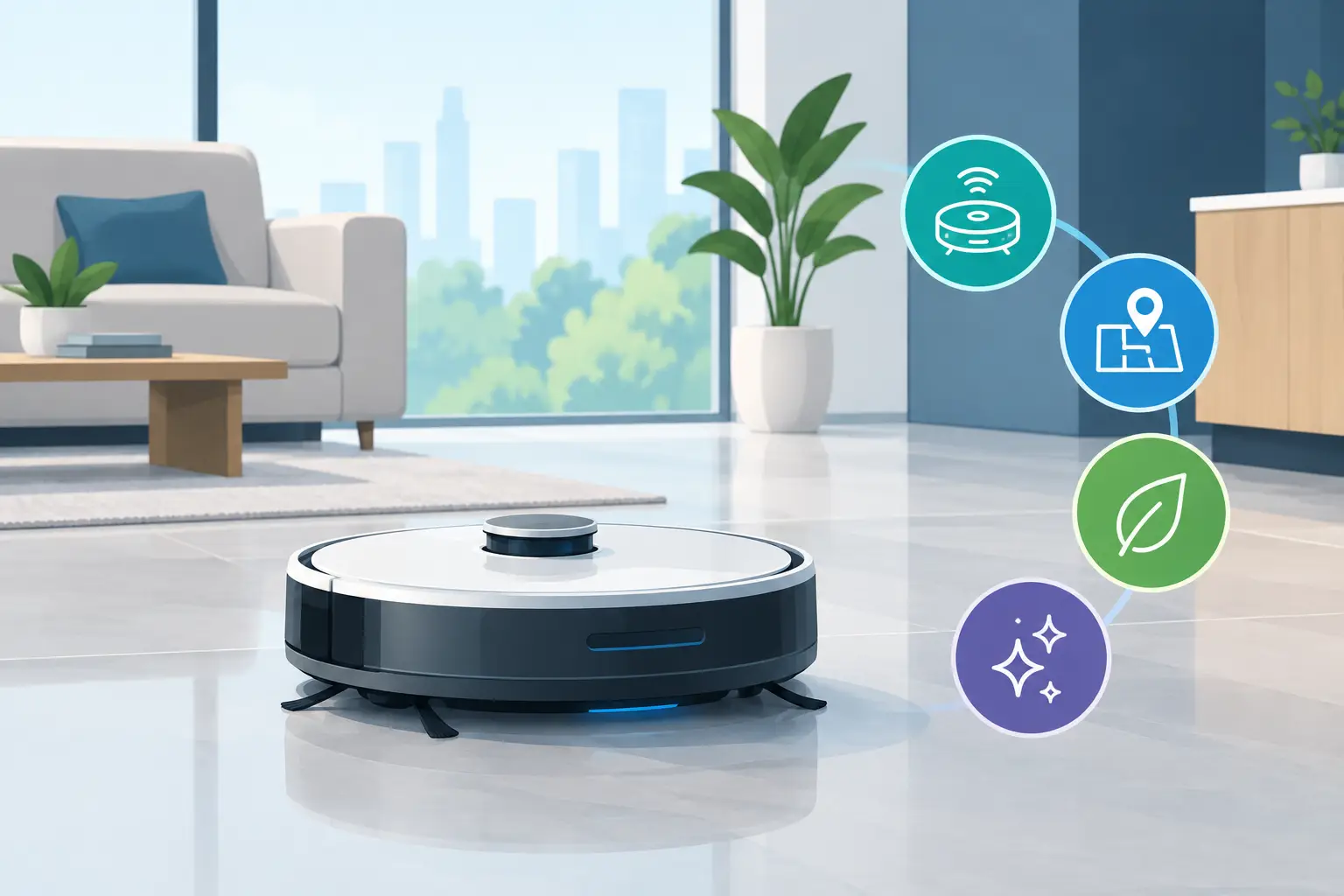
The clearest change is that robot vacuums are becoming more independent. Earlier models needed frequent rescuing from chair legs, cables and room edges. Newer machines use cameras, lasers or sensors to map rooms, recognise obstacles and choose more efficient routes. They are also more likely to return to a docking station to recharge, empty collected debris or wash their mopping pads.
That reduces the small jobs that used to make ownership frustrating. A homeowner may be happy to run a machine while at work. An office manager may schedule it to operate after staff have left. In either case, the value is consistency rather than a dramatic one-off result.
Mopping is moving forward too. Better models can lift their pads when they reach a carpet, apply water more evenly and make several passes over a marked spill zone. Some units separate clean and dirty water in their docks. This is a genuine improvement for sealed hard floors, particularly in kitchens, hallways and compact flats where dust builds up quickly.
There is still a practical limit. A rotating pad cannot scrub every corner, clean a greasy splashback or deal properly with dried-on residue around a bin. It will also struggle when a floor has not been cleaned for some time. In those cases, a professional deep clean gives the robot a genuinely clean surface to maintain.
Smarter navigation does not mean a hands-off home
Obstacle recognition is one of the most talked-about developments, but it needs a little realism. Robots are improving at spotting shoes, pet bowls, cables and larger objects. They are not guaranteed to identify every loose charging lead, child’s toy, curtain edge or low piece of furniture in a busy room.
Preparation remains part of the routine. Floors need to be reasonably clear, doors need to be open where access is wanted, and delicate items should be moved. In a crowded London flat, that can take almost as long as a quick manual vacuum if the floor doubles as storage space.
Thresholds and floor transitions matter as well. Many machines handle a shallow lip between rooms, but thicker rugs, raised door bars and uneven flooring can stop them. A single robot may clean the main living space well but never reach a separate room without being carried. Before buying one, measure the awkward areas rather than relying on product descriptions alone.
The rise of self-emptying and self-washing docks
Self-emptying docks make robotic cleaning more appealing for people with pets, allergies or busy routines. Instead of emptying a small onboard bin after every run, the robot transfers dust into a larger bag or container. Self-washing docks take care of the mop pads, and some also dry them to reduce odours.
Convenience is the point, but it is not zero maintenance. Dust bags still need replacing, water tanks need refilling, dirty-water containers need emptying, and filters and brushes need cleaning. Neglect the dock and it can become the least pleasant part of the set-up.
There is also a space consideration. A dock is larger than a standard charging base and needs an accessible socket and enough clear floor around it. That may be straightforward in a house or a spacious office, but much less so in a small flat, retail unit or packed staff kitchen.
Commercial robotic cleaning is becoming more targeted
In commercial settings, the useful trend is not necessarily a small domestic-style robot scaled up. Larger autonomous scrubbers and vacuums are being used for predictable, open areas such as warehouse aisles, showrooms, airport spaces and wide office floors. Their strength is repeatable coverage over a defined route, particularly outside peak hours.
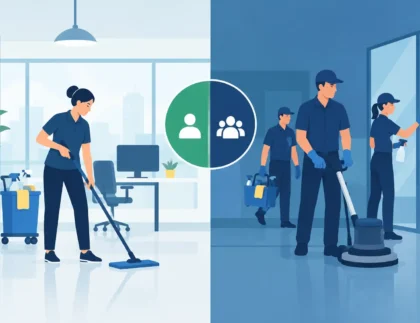
For facilities teams, this can support a more regular floor-care schedule and help staff focus on work that needs human attention. A machine can cover open floor space repeatedly; a cleaning professional can respond to washrooms, touchpoints, corners, spillages, bins, glass and changing site conditions.
High-footfall sites need that flexibility. A restaurant entrance may need immediate attention after wet weather. A medical facility requires carefully managed hygiene routines. A shop floor can be rearranged overnight. Robots work best in stable environments, whereas professional cleaners adapt to what is actually happening on site.
Data, privacy and security need a place in the decision
Connected robots can be controlled by an app, scheduled remotely and, in some cases, linked with voice assistants or building systems. That is convenient, particularly for landlords managing vacant properties or office managers overseeing several areas. It also raises questions worth asking before a device is introduced.
If the robot uses a camera or stores a map of the premises, understand what information is collected, where it is held and who can access it. This is especially relevant in offices, clinics, shared residential buildings and premises with confidential material. Choose devices with clear privacy settings, secure account controls and sensible user permissions.
The operational point is equally important: a robot cannot be the only plan. If the Wi-Fi fails, an app subscription changes or a device needs repair, someone still needs to keep the property clean. A dependable cleaning service provides continuity rather than adding another task to an already stretched team.
Eco-friendly claims need a closer look
Robotic cleaners can support lower-waste routines when they use water carefully, clean little and often, and reduce the need for disposable wipes. Scheduled upkeep can stop dirt from being walked deeply into carpets or ground into hard floors, which may make regular cleaning easier.
However, eco-friendly performance depends on the full picture. Rechargeable machines use electricity, replacement bags and pads create waste, and a poorly maintained robot may use more water or work less effectively. The greenest choice is rarely the device with the boldest label. It is the one that is durable, repairable, used properly and paired with sensible cleaning methods.
For deeper work, eco-conscious products and trained cleaners can make a bigger difference than a gadget alone. The Ultimate Cleaners uses practical, environmentally conscious methods while tackling the jobs a robot cannot reach or assess properly.
Where robots are useful, and where people still win
A robotic cleaner can be a sensible addition if your property has mostly hard, open floors and you want daily dust control. It can be particularly helpful in homes with shedding pets, for maintaining a tidy-looking office between visits, or for keeping hallway grit under control during wet London months.
It is less useful as the main answer to a property that needs restoration, hygiene control or detailed presentation. Robots do not move furniture, clean skirting boards properly, remove limescale, reach behind toilets, wash windows, treat upholstery or make a vacant property ready for its next tenant. They cannot tell the difference between a harmless mark and a stain that needs specialist treatment.
The practical approach is simple: use automation for the repetitive floor maintenance it handles well, then book professional cleaning for the work that protects standards, hygiene and the condition of the property. Clear the floor before each robot run, maintain its brushes and tanks, and set a schedule that suits the way your home or workplace is actually used. That is how the technology earns its place rather than becoming another appliance waiting for attention.