Keys are due back, the removal boxes are gone, and the property suddenly looks much bigger. That is when missed grease behind the hob, dust on skirting boards and a streaky shower screen become painfully obvious. The best cleaning tasks before handover are the ones that bring a property back to a clean, neutral and ready-to-use condition – without wasting hours on areas nobody will inspect.
Whether you are leaving a rented flat, preparing a house sale, handing over an office or welcoming new occupants, work from the top down and from the back of each room towards the exit. Cleaning after furniture has been removed is far easier, but it also reveals every mark that was previously hidden.
Start with the handover standard, not a random checklist
Before filling a bucket, check what “clean” means for your situation. Tenants should read the tenancy agreement and compare the property against their check-in inventory and photographs. You are normally expected to return it in the same standard of cleanliness as when you moved in, allowing for fair wear and tear. A worn carpet is not the same as a stained carpet, and a faded wall is not automatically a cleaning issue.
For commercial premises, check the dilapidations schedule, lease requirements and any facilities handover notes. An office manager may need to arrange waste removal, kitchen cleaning, carpet care and washroom hygiene, while a landlord may simply need the space presentable for a viewing. It depends on the agreement, so deal with specific requirements first rather than assuming a standard domestic clean covers everything.
Take clear, dated photos once the work is finished. They are useful evidence if there is a dispute over a deposit or condition report, and they give a practical record for the next occupier.
Best cleaning tasks before handover: the priority order
A good handover clean is not about spraying every surface with the same product. High-use rooms and built-in fixtures deserve the most attention because they are where grease, limescale, crumbs and odours collect. Tackle the following jobs in order.
1. Empty every cupboard, drawer and bin
Start by removing belongings, food, recycling and rubbish. Check high shelves, under beds, the loft if applicable, and the backs of kitchen drawers. Empty wheelie bins or internal bins if collection dates allow, then wipe them inside and out. Leaving a clean kitchen but a bin full of food waste can create an unpleasant smell within a day.
2. Clean the kitchen appliances properly
The oven, hob, extractor fan, fridge and freezer often receive the closest inspection. Degrease the hob and splashback, clean burner caps, wipe oven racks and remove baked-on residue from the oven interior. Pull out freestanding appliances where it is safe to do so and vacuum or mop underneath.
Defrost the freezer in good time, then wipe the seals, shelves and drawers dry. Leave the fridge switched off with its door slightly open only if the property manager has instructed you to do so. Otherwise, follow the appliance and handover guidance provided.
3. Make cupboards and worktops crumb-free
Wipe inside and outside of cabinets, including handles, hinges and the ledges above wall units. Food debris in corners is easy to miss. Clean worktops, sinks and taps, paying attention to areas around the tap base where limescale builds up.
Do not use an abrasive scourer on delicate stone, lacquered surfaces or stainless steel unless the manufacturer allows it. A rushed attempt to remove a mark can leave permanent scratches and turn a cleaning task into a repair issue.
4. Remove limescale in bathrooms and toilets
A bright bathroom does not need to smell strongly of bleach, but it does need to look hygienic. Treat limescale on taps, shower screens, shower heads and around plugholes. Clean the toilet bowl, seat, lid, cistern exterior and the floor around the base.
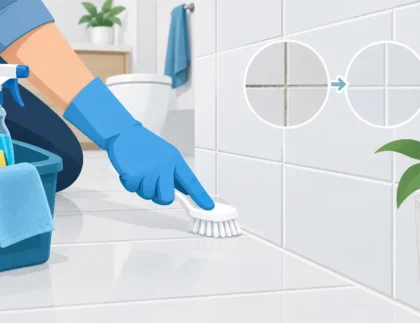
Give particular attention to grout, silicone sealant and extractor vents. Discolouration may respond to a suitable bathroom cleaner, but black mould that has penetrated damaged sealant may need maintenance rather than more scrubbing. Report damage instead of trying to conceal it.
5. Wipe high and low surfaces
Dust travels further than most people think. Work from ceiling corners and light fittings down to picture rails, radiators, skirting boards and door frames. Wipe switches, sockets carefully with a barely damp cloth, and clean fingerprints from doors and handles.
This is also the time to look behind internal doors, along window ledges and on top of wardrobes. These overlooked areas can make an otherwise clean property feel unfinished.
6. Clean windows from the inside
Clean internal glass, frames and sills, especially where condensation, dust or pet marks have built up. Use a clean microfibre cloth rather than paper that sheds fibres. External window cleaning can make a strong difference to first impressions, but only do it where access is safe and permitted.
For upper-floor flats, large commercial windows or difficult external glass, professional window cleaning is the sensible choice. Safety matters more than a last-minute shine.
7. Refresh carpets and hard floors
Vacuum slowly, including edges, corners and under any remaining furniture. Treat fresh spots according to the carpet fibre and stain type, testing any product in an inconspicuous place first. Avoid soaking carpets the evening before handover, as damp carpet can smell musty and may not dry in time.
Hard floors need vacuuming or sweeping before mopping. Use the correct cleaner for wood, laminate, vinyl, tile or stone. Too much water can damage laminate edges and timber flooring, while the wrong product can leave a dull or slippery film.
8. Deal with marks on walls carefully
Light scuffs near switches, hallways and furniture lines are common. A soft damp cloth or appropriate wall cleaner may lift them, but rub gently. Matte paint can burnish or lose colour when scrubbed too hard.
If there are holes, peeling paint or deep scratches, do not assume cleaning will solve the problem. Photograph the condition and discuss repairs with the landlord, agent or property manager if required.
9. Clear odours at the source
Open windows where practical, then remove the cause of any smell: food remnants, bin residue, pet hair, damp towels or a blocked sink. Wash removable bins, clean traps where appropriate and make sure kitchen and bathroom areas are dry.
Heavy fragrance is not a substitute for cleaning. In fact, an overly scented room can make an inspector wonder what it is hiding. A neutral, fresh-smelling property is the goal.
10. Check balconies, entrances and storage areas
Sweep balconies, patios, porches and private entranceways. Remove plant pots, cigarette ends and personal items unless agreed otherwise. Do not wash debris into shared drains or communal spaces.
Inside, inspect utility cupboards, airing cupboards, lockers and storage areas. They should be empty, dust-free and accessible. These are common places for forgotten possessions, especially during a fast move.
11. Finish with a room-by-room inspection
Walk through each room as if you are seeing it for the first time. Turn on lights, open cupboards, look at floors from different angles and check mirrors for smears. Flush toilets, run taps briefly and make sure no cleaning cloths, product bottles or rubbish bags remain.
The final pass is where small details earn their value. A clean plughole, polished tap and dust-free skirting board signal care far more clearly than an expensive air freshener.
12. Keep cleaning separate from repairs
Cleaning can improve presentation, but it cannot fix a broken blind, cracked tile, loose handle or faulty appliance. Make a short list of issues discovered during the clean, photograph them and raise them promptly with the relevant person.
This separation protects everyone. It prevents an occupier from accidentally worsening damage and helps landlords or facilities teams arrange the right trade rather than expecting cleaners to resolve maintenance work.
When a professional handover clean is worth it
A professional clean is particularly useful when time is tight, the property has been heavily used, or the inspection standard is likely to be high. End-of-tenancy cleaning, deep oven cleaning, carpet cleaning and internal window cleaning can each be arranged around the condition of the property rather than as unnecessary extras.
It is also a practical option for offices and commercial sites. Moving staff, equipment and documents is demanding enough without asking the team to scrub kitchen cupboards after hours. The Ultimate Cleaners can provide a tailored clean for homes and workplaces across London, using eco-friendly products and a clear scope of work so you know what is being handled.
Leave enough time for floors and carpets to dry, keep your final photos somewhere safe, and hand over a space that the next person can walk into with confidence. That is the kind of last impression worth making.