
A cleaning contract used to be a simple arrangement: a set number of hours, a familiar checklist and a regular invoice. The future of commercial cleaning contracts is more responsive than that. London businesses now need cleaning support that can adjust to changing occupancy, higher hygiene expectations, environmental targets and the realities of busy premises.
For office managers, landlords and facilities teams, the goal is not to add complexity. It is to get dependable results without paying for a service that no longer matches how the building is used. The strongest contracts will be clear, flexible and built around the risks and routines of each site.
Why fixed cleaning contracts are under pressure
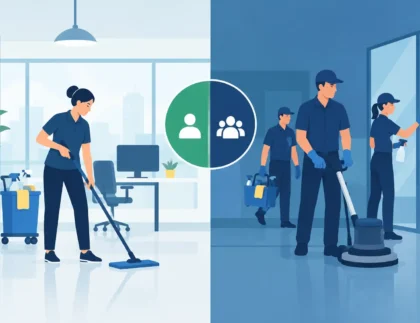
Many commercial buildings no longer operate on one predictable timetable. An office may be quiet on Mondays and full on Tuesdays to Thursdays. A retail site can be calm for most of the week, then face heavy footfall at weekends. Restaurants, medical facilities, warehouses and showrooms all have different pressure points.
A contract based only on cleaning hours can struggle in that environment. It may leave high-use areas needing more attention while lower-use spaces receive work they do not currently need. That is why businesses are moving towards service agreements that define the required outcome, alongside the labour and schedule needed to achieve it.
This does not mean every contract needs to be complicated. It means the scope should reflect the building. Washrooms, touchpoints, entrances, staff kitchens and customer-facing areas may need frequent checks, while meeting rooms or unused floors can follow a lighter routine. The right balance protects standards and gives the client better control of costs.
The future of commercial cleaning contracts will be flexible
Flexibility is becoming a core part of commercial cleaning, not an optional extra. A practical agreement should allow for seasonal changes, events, staff returns, refurbishments and unexpected spills or hygiene concerns without forcing a business to start from scratch each time.
Contracts will combine routine work and planned extras
Rather than treating every task as either daily cleaning or an emergency call-out, more contracts will combine a regular service with planned periodic work. This could include carpet cleaning, internal window cleaning, washroom deep cleans, high-level dust removal or post-construction cleaning after minor works.
Planned extras help facilities teams avoid the common problem of allowing dirt to build up until a major clean is required. They also make budgeting easier. A site can maintain its daily presentation while scheduling specialist tasks at sensible intervals.
The trade-off is that the contract must be specific. “Deep clean when needed” sounds convenient, but it can create uncertainty about timing, price and responsibility. It is better to agree what is included, what triggers additional work and how approval will be handled.
Cleaning schedules will follow occupancy, not habit
The old approach of cleaning every area in exactly the same way each night is not always the best value. Future-focused contracts will use practical information from the site: peak visitor hours, staff attendance patterns, delivery schedules, public access and known high-contact zones.
For example, an office in Canary Wharf with hybrid teams may need close attention on its busiest days, while a warehouse may require a stronger focus on welfare facilities, loading areas and safety-critical floors. Both need professional cleaning, but not the same plan.
A good provider should review the schedule with the client rather than assume that the original scope will remain right forever. Quarterly reviews are often enough for stable sites, while fast-changing premises may benefit from more regular check-ins.
Cleaner standards, clearer proof
Commercial clients increasingly want to know what has been cleaned, when it was completed and how any issue was resolved. This is particularly relevant in medical facilities, food service environments, schools, shared offices and high-footfall retail spaces.
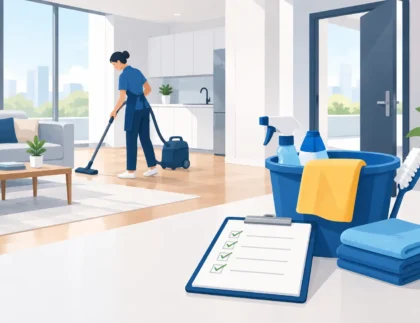
The answer is not paperwork for its own sake. It is simple accountability. Site checklists, supervisor inspections, communication logs and photo records for agreed tasks can all make performance easier to manage. When a concern is raised, the client should not have to chase several people to find out what happened.
Future contracts are likely to place greater emphasis on measurable service levels. These may cover response times for urgent requests, inspection frequency, consumable checks, complaint handling and standards for key areas such as washrooms and entrances.
There is a balance to strike. A contract with dozens of targets can become difficult to run and may distract from the actual condition of the site. The most useful standards focus on the areas that affect staff, visitors, compliance and the customer experience.
Eco-friendly cleaning will move from preference to expectation
For many London businesses, environmentally conscious cleaning is no longer just a nice addition. It is part of wider sustainability commitments and an everyday expectation from staff, tenants and customers.
That will affect the future of commercial cleaning contracts in several ways. Clients will ask more questions about product choices, dilution, packaging, waste handling and the use of concentrated or lower-impact cleaning solutions. They may also want to reduce unnecessary consumable use without compromising hygiene.
Eco-friendly cleaning is not about choosing a product because the label looks green. It needs to work for the surface, the level of soiling and the environment being cleaned. A restaurant kitchen, a medical setting and a standard office each have different requirements. The right contractor will recommend products and methods that support cleanliness, safety and sustainability together.
Contracts should be honest about what can be measured. Claims about reduced waste or product use are more useful when they relate to a realistic site plan, not broad promises that cannot be checked.
Technology will support the service, not replace people
Digital booking, reporting and scheduling are making cleaning contracts easier to manage. For clients, this can mean faster quote requests, clearer communication, straightforward payment and a simple route for raising additional needs. For cleaning teams, it can help organise visits, track tasks and flag issues quickly.
However, technology does not replace a trained cleaner who notices a slip risk, an overflowing bin or a washroom that needs immediate attention. Commercial cleaning remains a people-led service. The best use of technology is to remove admin friction and give clients more visibility, while allowing cleaners and supervisors to focus on the condition of the premises.
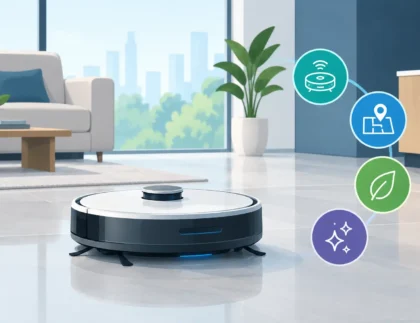
Automation and specialist equipment may play a larger role in large, open sites with repetitive floor-care needs. Yet they are not automatically the right answer for every property. Small offices, busy restaurants and complex public-facing spaces often need the judgement and flexibility of an experienced team.
What to look for when renewing a contract
Before renewing or tendering a commercial cleaning agreement, start with the building rather than the previous price. Consider how the space is actually used now, which areas create the most complaints, where hygiene risks sit and what tasks are being missed.
Then ask whether the scope separates routine cleaning from specialist work. Make sure the schedule identifies high-priority areas, states how additional requests are approved and gives you a clear contact route when something needs attention. Price matters, but a low figure is poor value if the scope is vague, supervision is limited or necessary work is repeatedly treated as an extra.
It is also worth asking how the provider handles staff cover, quality checks, eco-friendly products and urgent call-outs. These details often determine whether a contract feels effortless or becomes another problem for the facilities team to manage.
For businesses across London, a dependable cleaning partner should make the premises easier to run, not harder. The Ultimate Cleaners can build commercial cleaning around your site, whether you need regular office support, specialist cleaning or a flexible plan for a high-footfall environment.
The most useful contract for the years ahead will not be the longest or the most technical. It will be the one that reflects your premises honestly, adapts when your needs change and keeps the people using your space confident that it is clean, safe and ready for work.