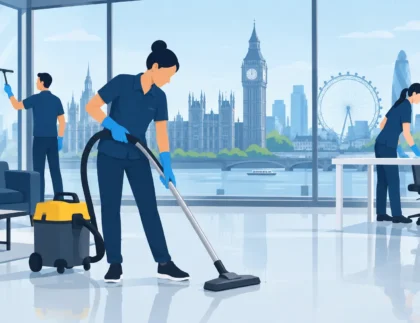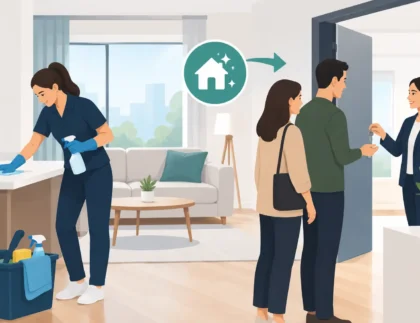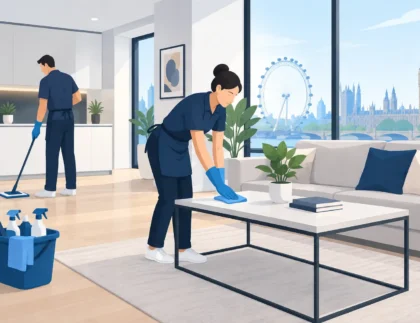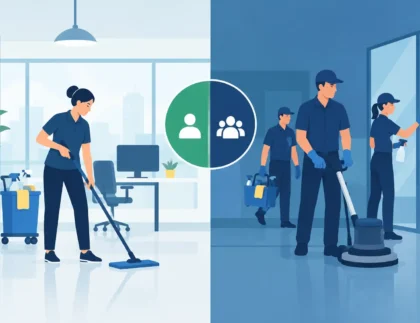
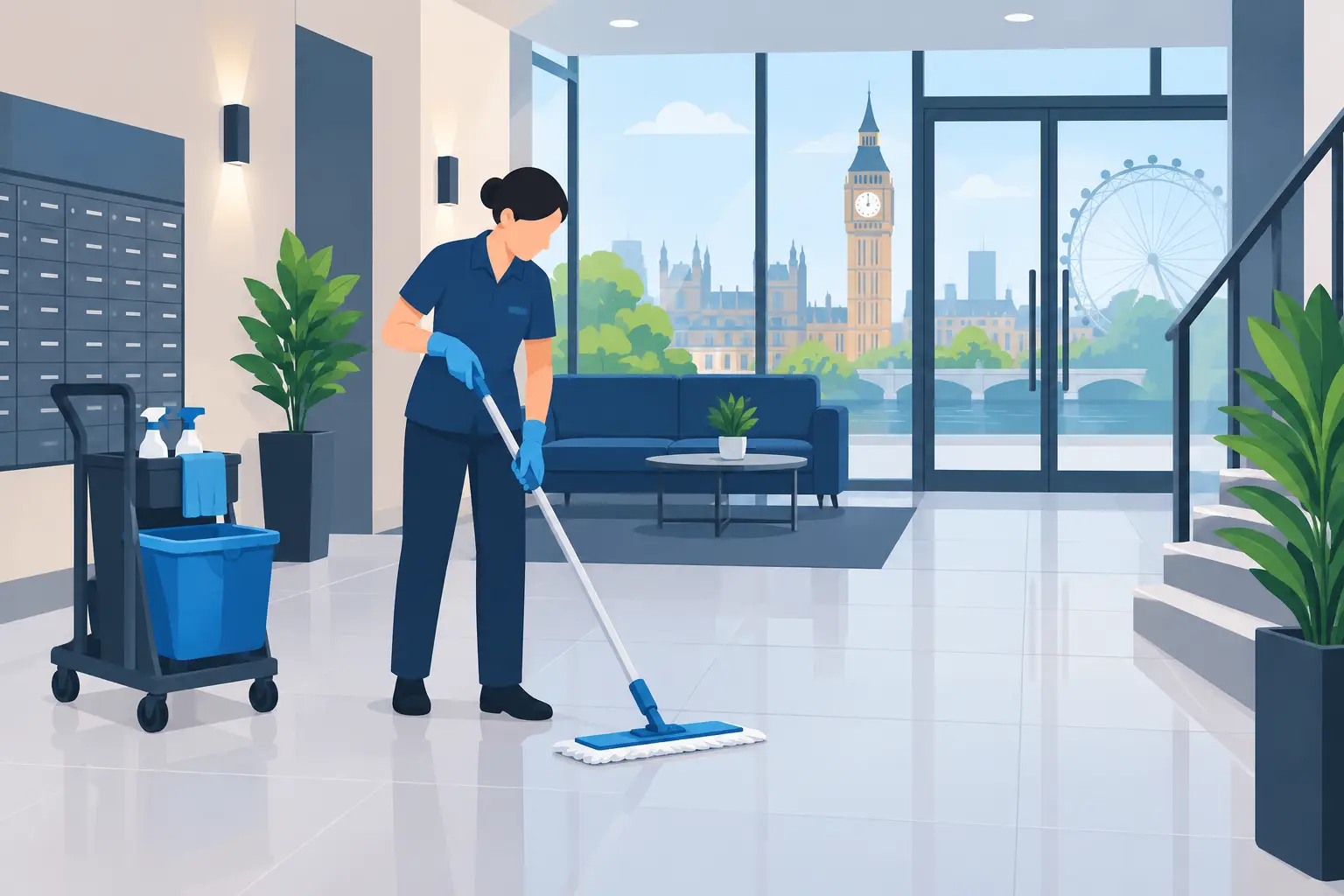
The entrance to a block, office building or mixed-use property gives people their first answer to a simple question: is this place well managed? Scuffed glass, overflowing bins and dirty stairwells quickly create the wrong impression. This guide to communal area cleaning explains how to keep shared spaces hygienic, presentable and easier to manage without adding another job to an already busy day.
What counts as a communal area?
Communal areas are the parts of a property used by more than one resident, visitor, employee or customer. In residential buildings, that usually means entranceways, lobbies, corridors, stairs, lifts, landings, bin stores and shared laundry rooms. In commercial premises, it can also include reception areas, shared kitchens, toilets, meeting spaces and car parks.
These spaces see more footfall than individual flats or offices, and they collect dirt accordingly. Rainwater is walked in, fingerprints build up on doors and lift buttons, and rubbish can become a problem far faster than expected. Cleaning them properly is not just about looking tidy. It supports safety, hygiene and the value of the property.
Start with the building, not a generic checklist
A good communal cleaning plan reflects how people actually use the building. A quiet converted house with six flats needs a different routine from a busy development with lifts, a concierge desk and daily deliveries. The same applies to offices, shops and medical facilities, where cleaning standards may need to be more frequent or more specialised.
Walk through the property at different times of day before setting the schedule. Look for where people enter, wait, eat, leave rubbish and touch surfaces. Notice whether wet weather makes floors slippery, whether the bin area is difficult to access, and whether a particular corridor gets marked by buggies, bikes or deliveries.
This practical review helps you focus time where it makes a real difference. There is little value in polishing an unused window every day while the entrance mat is saturated and the lift mirror is marked.
Prioritise high-touch and high-footfall points
The busiest surfaces should be cleaned most often. Door handles, entry systems, handrails, lift buttons, communal light switches and intercoms are touched repeatedly throughout the day. They need careful wiping and suitable disinfection, particularly in buildings with vulnerable residents, healthcare settings or high visitor numbers.
Floors need equal attention. Grit and moisture can damage finishes over time and increase the risk of slips. Vacuuming or sweeping removes loose debris, but hard floors also need mopping with the correct product for the surface. Using too much water on wood-effect flooring, for example, can leave streaks or cause damage around joins.
Set a realistic communal area cleaning frequency
Frequency should be based on footfall, building layout and the type of occupants. Cleaning too infrequently allows grime to become harder and more expensive to remove. Cleaning more often than needed can waste budget. The right answer depends on the property.
For a small residential block, a weekly clean may be enough for corridors, stairs and the entrance. Larger blocks often benefit from two or more visits each week, with extra attention to lift areas and bin stores. A busy office reception, shared toilets or restaurant entrance may need daily servicing, and sometimes cleaning during operating hours.
A clear schedule should state what happens at each visit. Daily work might include litter removal, floor care and touchpoint cleaning. Weekly tasks can cover dusting ledges, polishing internal glass and cleaning skirting boards. Monthly work may include high-level dusting, detailed stain removal and a deeper clean behind furniture or fixtures.
Seasonal changes matter too. London’s wet months can mean more mud, leaves and water at entrances. During summer, bin areas may need closer monitoring because odours and pests become more likely. A flexible schedule is more useful than one that looks good on paper but cannot respond to the building’s real needs.
Use the right methods for each surface
Communal spaces often contain a mix of materials: carpet tiles, stone, vinyl, painted walls, stainless steel, glass and timber handrails. One product or technique will not suit all of them. Harsh chemicals can dull stone, strip floor finishes or leave unpleasant fumes in enclosed corridors.
Eco-friendly cleaning products are a sensible choice where they are effective for the task. They can reduce harsh residues and help create a more pleasant environment for residents, staff and visitors. However, environmentally conscious cleaning should never mean cutting corners on hygiene. The product, dilution and contact time must be suitable for the surface and the level of soiling.
Carpets and entrance mats deserve particular care. They trap dirt before it spreads through the building, but only if they are vacuumed regularly and professionally cleaned when staining becomes noticeable. Leaving a dirty mat in place simply transfers grime further inside.
Do not overlook bins, odours and clutter
Bin stores can become the biggest source of complaints in a communal property. Overflowing bags, loose rubbish and missed collections affect the whole building, even when the main corridors are spotless. Regular cleaning helps control spills and odours, but it works best alongside clear waste arrangements for residents or tenants.
Make sure bins are accessible, labelled where needed and not blocking fire exits or access routes. If bulky items are regularly left in shared areas, the issue may need management action rather than extra cleaning alone. A cleaner can remove dirt, but they should not be expected to resolve ongoing misuse of the space.
The same principle applies to prams, bikes, parcels and personal belongings in hallways. Aside from making a building look untidy, clutter can create trip hazards and obstruct emergency routes. Clear communication and consistent building rules are essential.
Build quality checks into the routine
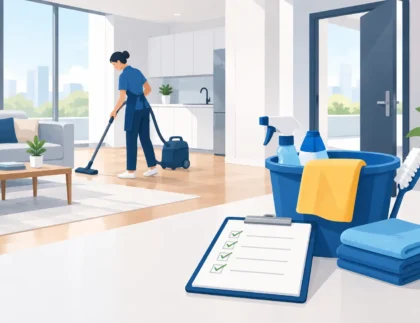
A completed visit is not automatically a good clean. Property managers and facilities teams need a simple way to confirm that standards are being met. This could be a signed checklist, time-stamped update or regular inspection of key areas such as entrances, lifts, toilets and bin stores.
Quality checks should focus on outcomes rather than just tasks ticked off. Are the floors dry and free from visible debris? Is the glass clear? Do the shared areas smell fresh rather than heavily perfumed? Are touchpoints clean, and has rubbish been removed? These are the details residents and visitors notice.
It is also helpful to keep a record of recurring issues. If one lift is always marked, or a particular stairwell repeatedly needs more attention, adjust the plan. Good cleaning is not static. It responds to the building.
When professional help makes sense
Communal cleaning can be handled in-house in a very small property, provided there is time, reliable cover and access to the right equipment. But responsibility often becomes difficult to manage as footfall increases. Missed visits, inconsistent standards and uncertainty over supplies can soon lead to complaints.
A professional cleaning team brings a defined schedule, trained staff and equipment suited to larger or more demanding spaces. This is particularly useful for landlords, managing agents, office managers and commercial property operators who need one dependable point of contact. It also makes it easier to arrange periodic deep cleans, carpet cleaning, internal window cleaning or post-construction work without starting from scratch each time.
At The Ultimate Cleaners, we help London properties keep the shared spaces people notice first in good order. Whether you need a regular routine for a residential block or a flexible plan for a busy workplace, the aim is simple: less chasing, fewer complaints and a clean communal space that feels cared for.
The best time to review communal cleaning is before residents or visitors start raising concerns. A well-planned routine keeps small issues small and gives everyone who walks through the door a better experience.