A cleaner calling in sick at 6am can become an expensive problem by 9am. Toilets are not serviced, bins overflow, staff notice, and visitors do too. That is why the in-house versus contract cleaning decision deserves more than a quick comparison of hourly rates. For a London business, it affects standards, staffing time, flexibility and how confidently your premises can open each day.
The right answer depends on the building, the hours it operates, the level of hygiene required and how much management capacity you have. An in-house team can offer familiarity and day-to-day control. A contract cleaning company can provide cover, specialist skills and a simpler way to manage a demanding essential service.
What is the difference?
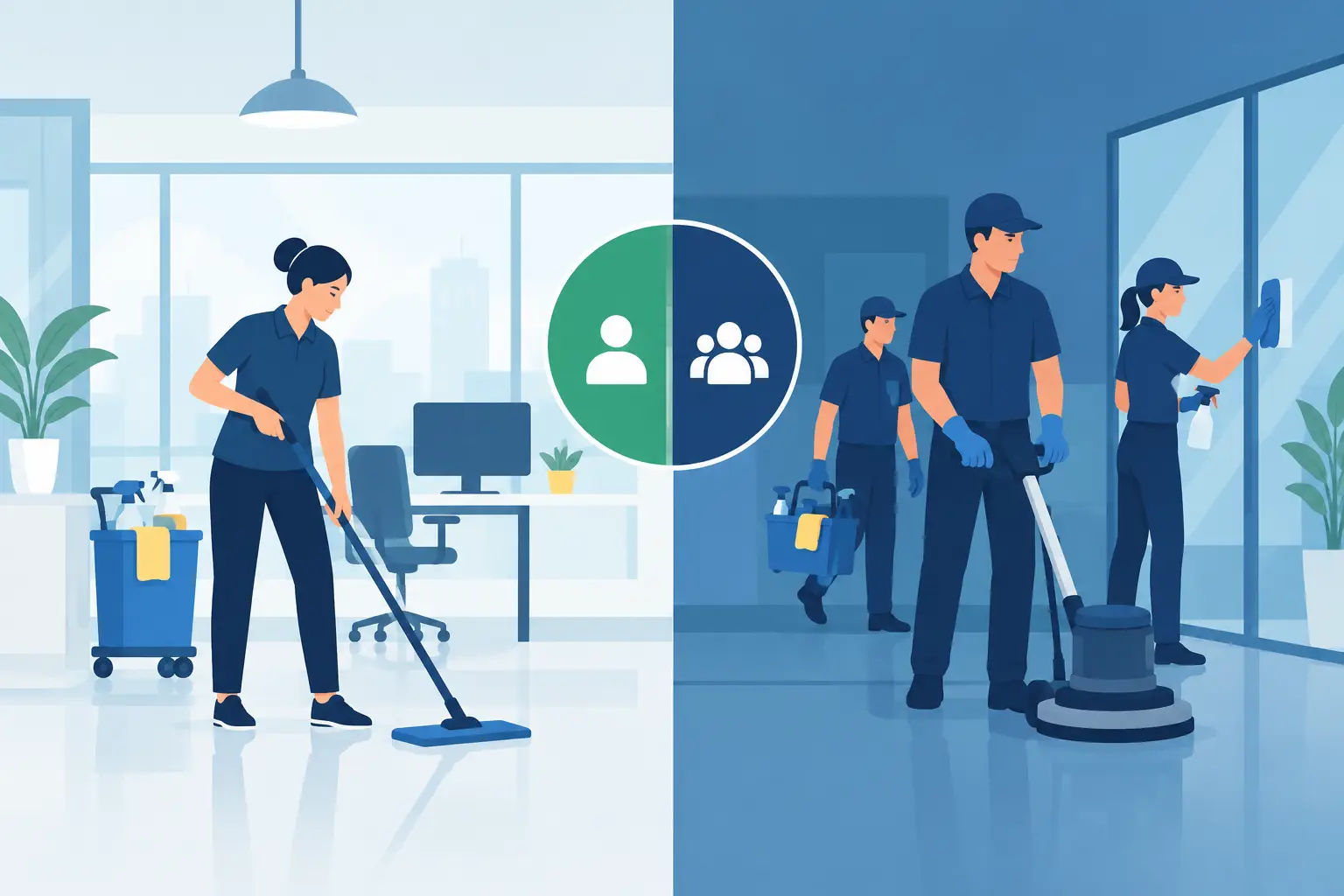
In-house cleaning means employing cleaners directly. Your business recruits them, sets their hours, supplies equipment and products, approves holiday, manages absences and handles payroll, training and performance. This can work well when cleaning is a constant part of operations and the work is closely tied to the site team.
Contract cleaning means appointing an external provider to deliver an agreed service. The provider employs the cleaning staff and typically takes responsibility for supervision, recruitment, cover, training, equipment and consumables, depending on the agreement. You pay for a defined service rather than building and running the team yourself.
Neither model automatically guarantees a cleaner workplace. Clear expectations, proper checks and regular communication matter in both cases. The difference is where the operational responsibility sits.
In-house versus contract cleaning: the real costs
The hourly wage is only one line in the budget. With direct employment, the full cost can include employer National Insurance, pension contributions, holiday pay, sick pay, recruitment, DBS checks where appropriate, uniforms, insurance, supervision and replacement cover. Add cleaning machinery, storage, products and repair or replacement costs, and a low hourly figure can look very different.
There is also the cost of management time. Someone needs to arrange rotas, interview applicants, deal with late arrivals, order supplies and resolve quality issues. In a small office, shop or restaurant, that work often falls to an office manager or owner who already has a full job.
A contract price may appear higher at first glance because it brings these responsibilities together. However, it can be easier to budget for. A good quotation should state the cleaning frequency, hours, tasks, supplies, equipment, site supervision and the process for reporting an issue. Ask what happens if the regular cleaner is unavailable, whether periodic deep cleans are included, and which tasks are charged separately.
The cheapest quote is not always the most economical choice. If missed cleans lead to complaints, staff frustration or a poor first impression, the saving disappears quickly.
Where an in-house team can make sense
Direct employment is often a sensible option for large, complex sites with cleaning needs throughout the day. A hospital, airport, busy factory or large corporate building may need cleaners permanently on site, with a detailed understanding of access rules, security procedures and site-specific routines.
An in-house cleaner can become a familiar part of the workplace. They may spot issues early, respond immediately to spills and build strong working relationships with staff. Businesses with established facilities management teams may also have the systems needed to recruit, train and supervise cleaners properly.
Control is the main attraction. You can change priorities at short notice, direct the team towards a particular area and set the exact working pattern. But that control requires active management. Without clear task lists, inspections and support, an in-house arrangement can become inconsistent, especially when one person is left covering a large site alone.
Why many London businesses choose a contract cleaner
For many offices, retail premises, restaurants and managed properties, a contract cleaner removes the hardest part of cleaning: keeping the service staffed and dependable. If a cleaner is ill or on holiday, the provider should arrange cover rather than leaving your team to start calling around.
Specialist requirements are another reason to outsource. Carpet extraction, high-level cleaning, post-construction cleaning, window cleaning and intensive washroom work call for the right machinery, products and trained operatives. Buying equipment for occasional use is rarely good value, and using the wrong method can damage floors, fabrics or finishes.
Flexibility matters in London too. A business may need early-morning office cleaning, evening restaurant cleans, extra attention after an event or a one-off deep clean before a lease inspection. A contract can be designed around those needs and adjusted as the premises change.
For landlords and managing agents, contract cleaning can be particularly useful between tenancies or after building works. Rather than maintaining a payroll for irregular demand, they can book move-in, move-out or post-construction cleaning when it is genuinely needed.
Quality control should be built into either choice
Whether cleaners are employed directly or supplied through a contractor, vague instructions create vague results. A proper cleaning specification is the best place to start. It should cover the rooms or zones to be cleaned, the frequency, the standard expected, access arrangements and who checks the work.
For example, an office specification may include desks, floors, kitchen surfaces, washrooms, bins and touchpoints, while a restaurant will need greater focus on front-of-house presentation, washroom hygiene and cleaning around service hours. A warehouse may prioritise dust control, welfare areas and safe cleaning around stock and machinery.
Inspection matters just as much as the original plan. Decide who reports missed tasks, how quickly issues should be corrected and how changes are recorded. A contract cleaner should have a clear point of contact and a straightforward route for raising concerns. An in-house team needs the same clarity, not informal assumptions that someone will notice.
Questions to ask before you decide
Start with demand rather than headcount. How many cleaning hours do you need each week? Are those hours predictable, or do they rise and fall with trading, footfall or projects? If cleaning is needed only before opening and after closing, a contract may be more practical than hiring a part-time employee and arranging cover.
Next, look at the risk of an absence. Can your workplace operate acceptably if no cleaner arrives for one day? Can it cope for a week? If the answer is no, make guaranteed cover a central requirement, whether you manage it internally or through a provider.
Then consider the type of cleaning. Routine desk, kitchen and washroom cleaning is one thing. Clinical settings, food premises, construction dust, stained carpets and high windows are another. Higher-risk or specialist work usually benefits from trained people, appropriate products and proven procedures.
Finally, be honest about capacity. If your facilities or office team can manage recruitment, rotas, training, supplies and audits without losing focus on core work, an in-house team may be a strong fit. If not, outsourcing can give you more time back while maintaining a clear standard.
A blended arrangement can be the practical answer
The choice does not have to be all or nothing. Some larger organisations keep a small on-site cleaning team for immediate daytime needs and use a contract provider for evening cleaning, holiday cover and specialist work. This approach can preserve familiarity on site without forcing your own staff to manage every absence or invest in every type of equipment.
A similar model works for residential blocks and mixed-use properties. A regular cleaner can maintain communal areas, while a professional team handles carpet cleaning, windows, end-of-tenancy cleans or urgent work after a leak or refurbishment.
Choose reliability, not just a label
The better option is the one that keeps your premises clean without creating a hidden workload for your business. If you choose in-house cleaning, budget for the full employment and management commitment. If you choose a contractor, look for transparent scope, trained staff, responsive communication and dependable cover.
For businesses and property managers across London, The Ultimate Cleaners can tailor regular and specialist cleaning around the way your site actually operates, using eco-friendly products where appropriate and simple scheduling. Request a free estimate with your cleaning hours, site type and priority areas, then choose the arrangement that lets your team get on with the work only they can do.