A warehouse floor can look acceptable from a distance while hiding the problems that slow a shift down: dust around racking, pallet debris in walkways, oil near loading areas and packaging waste building up where it should not. The right warehouse cleaning frequency is not simply about keeping up appearances. It helps protect staff, stock, equipment and the day-to-day flow of your operation.
For most London warehouses, the answer is a layered cleaning plan rather than one big clean now and again. High-risk areas need attention every day, while detailed cleaning can be scheduled weekly, monthly or around quieter trading periods. The aim is simple: keep your site clean enough to work safely and efficiently without disrupting picking, deliveries or dispatch.
How often should a warehouse be cleaned?
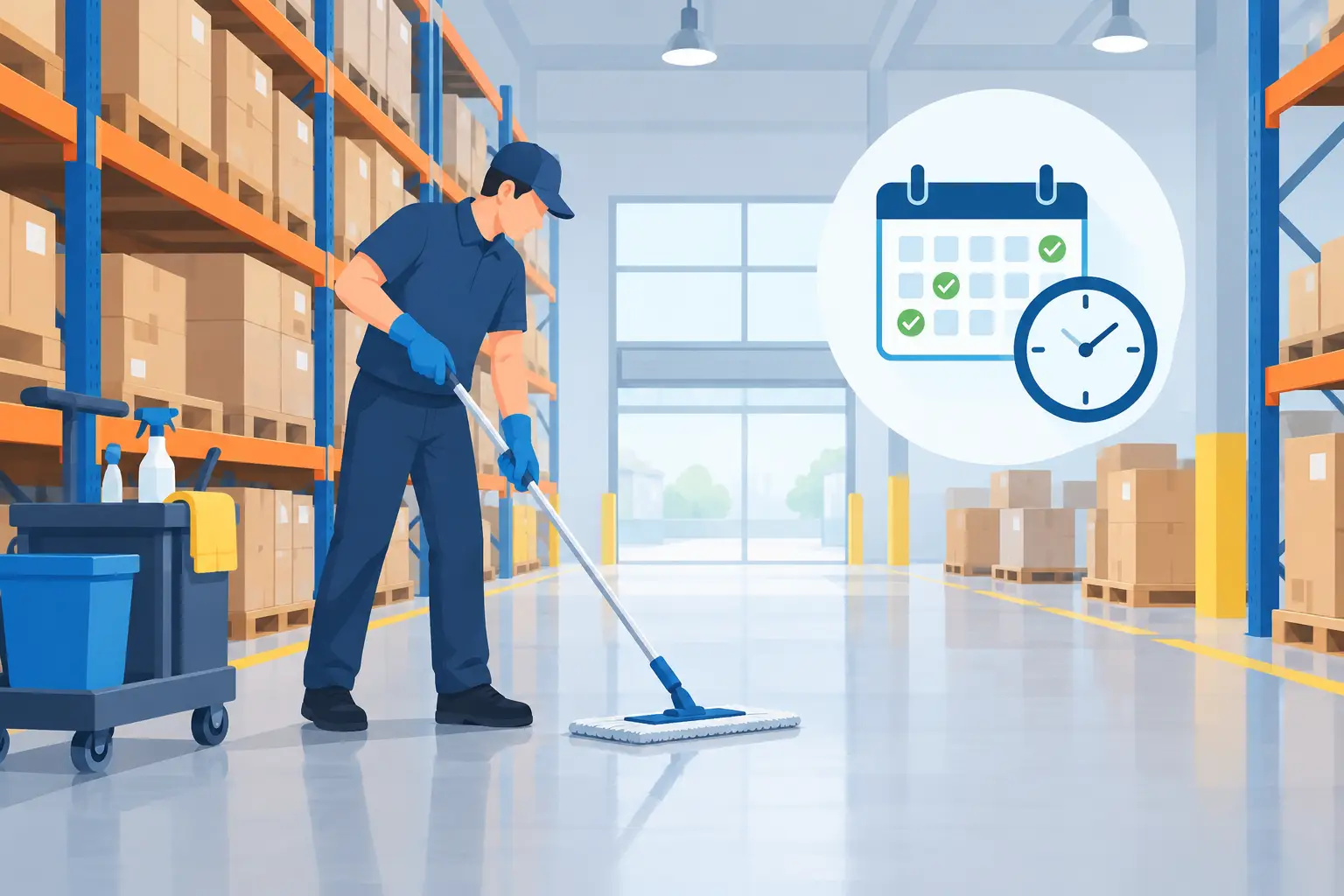
A working warehouse should receive some level of cleaning every day. This usually includes clearing waste, dealing with spills, sweeping high-traffic routes and keeping washrooms, staff areas and entrances presentable. In busy sites, especially those handling frequent deliveries or operating multiple shifts, these tasks may be needed more than once per day.
A fuller clean is normally required weekly. This is the time to clean floors more thoroughly, remove dust from accessible surfaces, wipe doors and touchpoints, tidy storage areas, and address dirt that routine cleaning does not reach. Monthly or quarterly deep cleaning then deals with the areas that are easy to overlook, including high-level ledges, racking, loading bays, internal windows and machinery surrounds.
There is no useful one-size-fits-all answer. A small warehouse storing sealed, low-dust goods may manage with daily spot cleaning and a weekly professional visit. A high-volume fulfilment site, food-related facility or warehouse with forklift traffic will need a far more frequent programme.
What affects warehouse cleaning frequency?
Start with the activity inside the building, not just its square footage. A large but quiet storage unit may stay cleaner than a compact operation receiving lorries, handling cardboard and moving pallets all day.
Footfall and vehicle movement
Forklifts, pallet trucks, delivery drivers and picking teams bring in grit, water and tyre marks. These build up quickly at loading doors, dispatch points, aisle ends and pedestrian crossings. If floors become dusty or greasy, the risk of slips and trips rises, and line markings become harder to see.
Sites with heavy vehicle movement often need floor checks during every shift, with prompt spill response and regular machine cleaning. Leaving debris until the end of the week can create an avoidable safety issue.
The goods you store or handle
Packaging warehouses tend to collect cardboard dust and loose wrapping. Building supplies may create heavier dust, while cosmetics, electronics and healthcare products can require tighter standards to protect goods from contamination. Food storage and preparation environments may have additional hygiene requirements and should follow procedures suited to the products being handled.
The cleaner the goods need to remain, the more proactive your schedule should be. It is usually cheaper to prevent dust settling on stock than to clean or replace affected items later.
Season and weather
London weather has a direct effect on warehouse cleanliness. Wet autumn and winter days bring muddy footprints and standing water near entrances. In dry periods, open loading doors can let in road dust and debris. Your cleaning schedule should flex with the season instead of remaining fixed on paper.
Extra entrance mat cleaning, more frequent floor mopping and checks around drains can make a noticeable difference when conditions are poor outside.
Your building layout
Older units, high ceilings, exposed beams and complex racking layouts can all hold dust. Tight aisles may be harder to clean safely while staff are picking orders, while sites with mezzanines need a plan for both levels. A professional cleaning team can work around operational timings and access restrictions, so cleaning supports the shift rather than getting in its way.
A practical warehouse cleaning schedule
The most reliable approach is to divide cleaning into daily, weekly and periodic tasks. This gives your team a clear standard while making sure deeper jobs do not get forgotten during busy periods.
Daily cleaning tasks
Daily cleaning should focus on safety, hygiene and visible mess. Clear waste and packaging from workstations and walkways, check floors for spills or obstructions, and clean toilets, changing areas and break rooms. High-touch points such as door handles, clocking-in points, shared controls and handrails also deserve regular attention.
At the end of each shift, staff should leave work areas in a safe condition. That does not mean expecting warehouse operatives to carry out a full professional clean. It means setting a basic housekeeping standard so waste, loose materials and spills are dealt with before they become another team’s problem.
Weekly cleaning tasks
Weekly cleaning goes beyond quick checks. Floors should be cleaned using the right method for the surface and soil level, whether that is sweeping, scrubbing or specialist degreasing. Shelving at reachable height, skirting areas, internal glass, doors and staff facilities should be cleaned thoroughly.
This is also a good time to inspect corners behind stock, under packing benches and around charging stations. These areas often gather dust and debris unnoticed, particularly when the site is working at pace.
Monthly and quarterly deep cleaning
Periodic deep cleaning targets the dirt that routine cleaning cannot realistically manage. Depending on the warehouse, this can include high-level dust removal, detailed racking cleans, machine-area cleaning, warehouse floor restoration, cleaning loading bays and treating stubborn marks.
Schedule this work around stocktakes, quieter weekends or planned maintenance where possible. The trade-off is downtime versus cleanliness, but a well-planned service reduces disruption and helps preserve your flooring, racking and working environment over the long term.
Signs your warehouse needs more frequent cleaning
If you are seeing repeat slip hazards, dusty stock, persistent odours or complaints about washrooms and break areas, the existing schedule is probably not enough. Dirty floors that quickly look marked after cleaning may also indicate that the wrong equipment, products or cleaning method is being used.
Another warning sign is when supervisors rely on last-minute clean-ups before client visits, inspections or staff tours. A warehouse should be ready for scrutiny on an ordinary Tuesday afternoon, not only after a rushed clear-up.
Frequent damage to packaging can be worth investigating too. Dust, damp near entrances and debris in picking areas can affect the condition of cartons and products, creating waste that costs more than a better cleaning routine.
Why professional warehouse cleaning makes a difference
Warehouse cleaning is physically demanding and often needs equipment that is not practical for an in-house team to store or operate. Professional cleaners can bring suitable floor machines, industrial-grade supplies and a planned system for cleaning around active operations.
They can also give more attention to the jobs that tend to slip through the cracks: high-level dust, racking, loading areas, hard-to-reach edges and heavily soiled floors. For sites in London where space, staffing and delivery schedules are already under pressure, that support can take a recurring task off the facilities team’s list.
At The Ultimate Cleaners, we provide flexible commercial cleaning that can be shaped around your hours, site layout and the level of traffic your warehouse handles. Eco-conscious products can be used where appropriate, with a focus on thorough results and minimal interruption to your operation.
Set a schedule your team can maintain
The best warehouse cleaning frequency is the one that reflects how your site actually operates. Review it after busy seasons, changes in stock volume, new shift patterns or any increase in incidents and complaints. Cleaning should adapt as your warehouse does.
A clean warehouse is easier to work in, safer to move through and more reassuring for staff, visitors and customers. Put a practical routine in place now, and the next spill, delivery rush or inspection will feel far more manageable.